

Medical history & examination
Your podiatrist checks your nail problem, current medication, allergies, circulation and factors affecting healing.
The Ledbury Foot & Ankle Clinic
From routine nail and skin care to advanced foot and ankle assessments, our treatments are tailored to your needs. Explore each service to learn what happens during your appointment and what aftercare may involve.
Explore your options
Your first appointment
A thorough first visit to understand your concerns, review your health and agree the most appropriate next steps.
We ask about symptoms, current medication, allergies, previous medical conditions and any treatment you have already tried.
Your podiatrist examines the feet and may assess blood flow and sensation with a Doppler and other appropriate tests.
The findings are explained, along with treatment options, self-care advice and any need for further assessment or referral.
Everyday foot comfort
Personalised care for toenails, corns, calluses and hard skin to keep your feet healthy and comfortable.
We discuss any discomfort and examine your skin and nails before treatment.
As appropriate, we carefully cut and file nails, reduce thickened nails and remove corns or hard skin using podiatry instruments.
You receive practical guidance on nail care, moisturising, footwear and reducing pressure to help prevent recurring problems.
Nail and skin health
Thick, discoloured or brittle nails are assessed and suitable management options discussed; not all nail changes are fungal.
We examine your nail and surrounding skin, review your history and may recommend testing when the cause is unclear.
Options may include reducing a thick nail, nail and skin care, topical products and discussion of laser treatment where appropriate.
Toenails grow slowly, so visible improvement may take months. Responses vary and no method guarantees clearance.
Tailored treatment choices
We assess suspected verrucas and discuss whether treatment is needed and which option may suit you.
We check the lesion’s appearance, position and symptoms, and discuss previous treatments.
Options offered by the clinic include topical acids, Verrutop, cryotherapy, laser and needling, depending on the case.
Follow-up visits may be recommended because some verrucas require repeated treatment. Results vary between patients.
Focused treatment
A targeted laser treatment option for selected verrucas, discussed after assessing the lesion and your clinical suitability.
The podiatrist reviews your medical history and explains likely discomfort, expected response, alternative options and possible risks.
Appropriate protection and clinic laser-safety procedures are used while the area is treated.
The skin may be tender and require simple wound-care advice. More than one treatment can be necessary; success is not assured.
For selected persistent verrucas
A needling technique may be discussed for stubborn verrucas that have not responded to simpler approaches.
We assess suitability, discuss alternatives and risks, and obtain informed consent.
The area is generally numbed before the lesion is carefully needled using a sterile technique.
You receive dressing and activity guidance, with follow-up arranged to review healing and response. Clearance is not guaranteed.
For recurring ingrown nails
A minor procedure for selected painful or recurring ingrown toenails, with local anaesthetic and planned aftercare.
A medical history, medication and allergy review, an examination and an explanation of benefits, risks and alternatives take place.
After your written consent, local anaesthetic is given and checked. The affected nail edge, or occasionally the whole nail, is removed as agreed.
A dressing is applied, written aftercare advice is provided, and four follow-up appointments are arranged for healing checks and dressing changes.
Nail surgery — step by step
We explain each stage before proceeding, and arrange follow-up care for dressing changes and healing reviews.
Your podiatrist checks your nail problem, current medication, allergies, circulation and factors affecting healing.
The procedure, risks, alternatives and aftercare are explained. You can ask questions before signing the consent form.
The toe is numbed with local anaesthetic; the podiatrist checks it is working before surgery begins.
The affected nail edge or whole nail is removed as agreed. A sterile dressing is applied afterwards.
Four complimentary redressing and review appointments are included to check healing and change dressings.
Four complimentary follow-up appointments, four dressing changes and a dressing pack are included as described on the clinic’s current website. Follow-up dates depend on individual healing and will be confirmed by the clinic. Seek prompt advice if pain, redness, swelling or discharge worsens.
How your feet and legs move
A detailed assessment of lower-limb movement, foot pressure and factors contributing to pain or altered walking.
We discuss pain, activity, footwear, previous injury and your medical history.
We examine joints, strength and movement and may assess walking and pressure patterns using gait-analysis equipment.
Depending on findings, advice may include footwear changes, exercises, onward referral or orthotics.
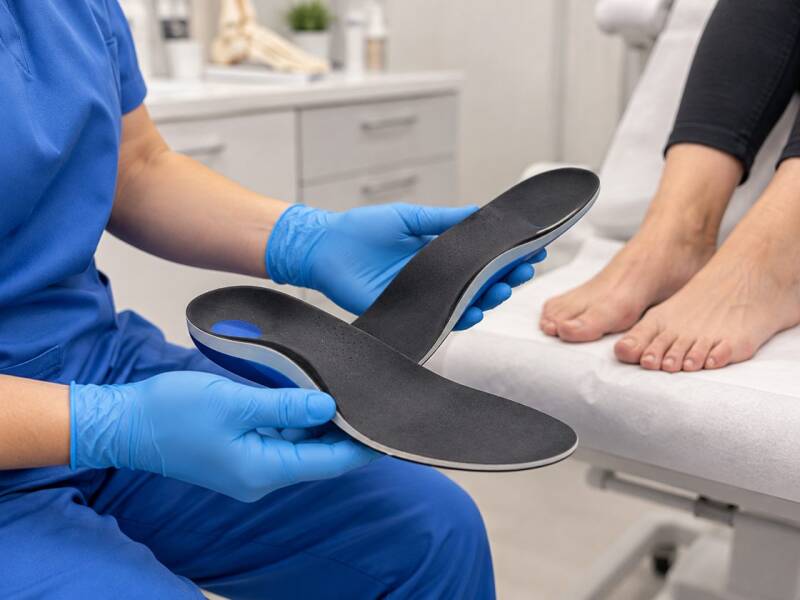
Support and comfort
Insoles or orthoses may be recommended to redistribute pressure, support alignment and improve comfort.
Orthotics are considered after reviewing your symptoms, foot shape and movement.
We discuss suitable prefabricated or custom options, how they fit in footwear and how to gradually get used to them.
Follow-up helps check comfort and fit and allows adjustments where needed. Orthotics are not necessary for every patient.
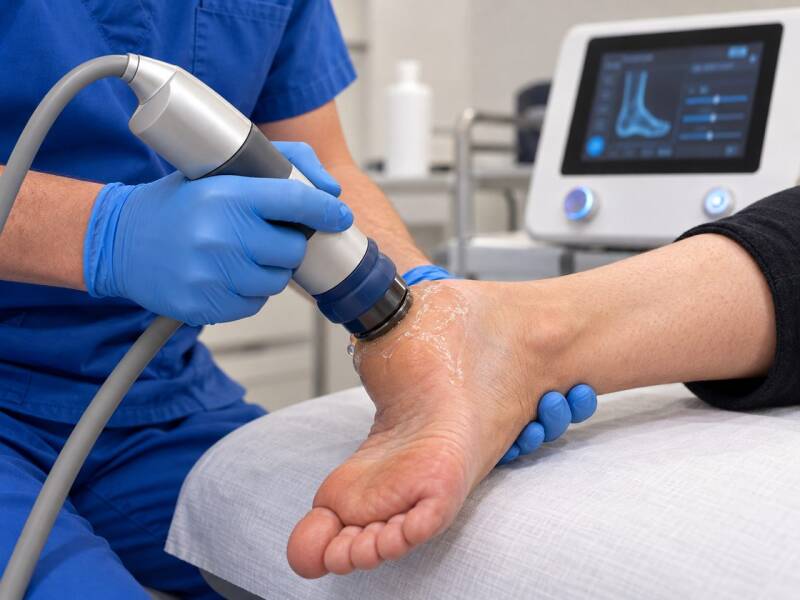
A non-surgical option
Extracorporeal shockwave therapy uses externally applied acoustic pulses for selected persistent soft-tissue conditions.
We review symptoms and any contraindications before recommending treatment.
A handheld applicator delivers pulses to the affected area, which may feel uncomfortable during treatment.
You receive activity guidance and a plan for review. Response varies and a course of treatment may be recommended.
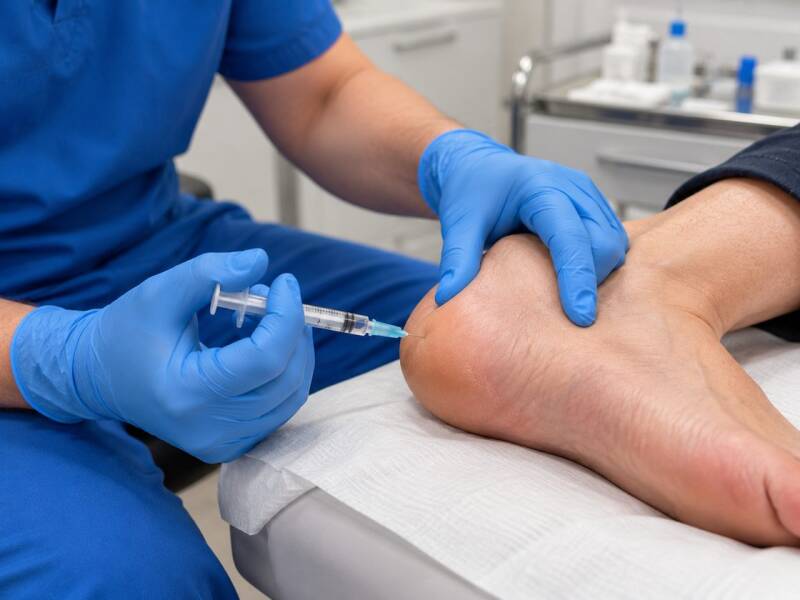
Specialist treatment discussion
Injection options may be considered for selected foot and ankle conditions after assessment and discussion of alternatives.
Your health, medication, allergies and diagnosis are assessed. The practitioner explains the particular injection, risks, benefits and alternatives.
Written informed consent is obtained when indicated. The injection is administered using an appropriate sterile technique.
Advice and review depend on the medication used and the condition treated. Not everyone is suitable for injections.
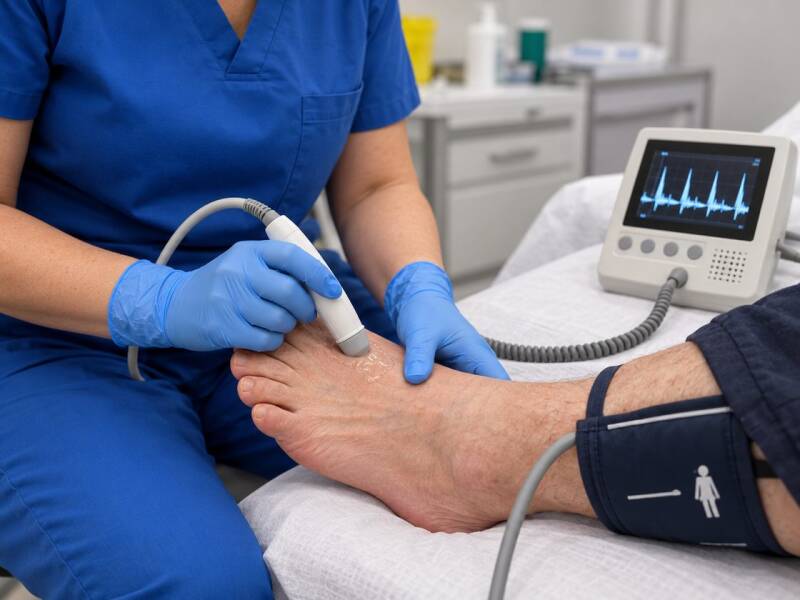
Prevention and risk awareness
Foot assessments and practical advice help identify potential problems early for people with diabetes or circulation concerns.
We examine the skin, nails, foot shape, footwear and any areas of pressure or injury.
Blood flow and protective sensation may be assessed using appropriate clinical tools.
We explain individual foot-care needs and may recommend closer monitoring or onward referral. A new ulcer or rapidly worsening foot should be assessed promptly.
Age-appropriate foot care
Gentle assessment of childhood foot concerns such as ingrown toenails, verrucas, painful feet or changes in walking.
We discuss the concern with the child and parent or guardian and carry out an examination suited to the child’s age.
Depending on the issue, we may offer nail or skin care, footwear guidance or gait assessment.
We explain home care, when review is needed and when another clinician may be more appropriate.
Our team can help you choose an appropriate appointment and explain the next steps.